
Paramarine® - Advanced Marine Design Software by QinetiQ UK
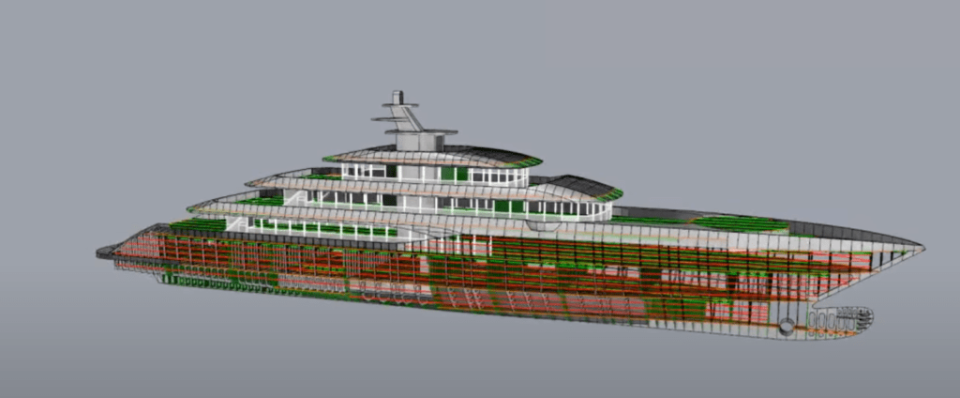
Paramarine® is a fully integrated naval architecture and marine engineering software suite developed by QinetiQ GRC, UK. It is widely recognized as one of the most powerful and flexible tools for designing surface ships, submarines, and other marine platforms.

Used by leading shipbuilders, defense organizations, and academic institutions worldwide, Paramarine enables engineers to push the boundaries of marine design through its robust analytical capabilities and intuitive graphical interface.

Core Capabilities

Paramarine supports the entire ship design lifecycle-from concept to detailed engineering-within a single, unified environment. Its key features include:

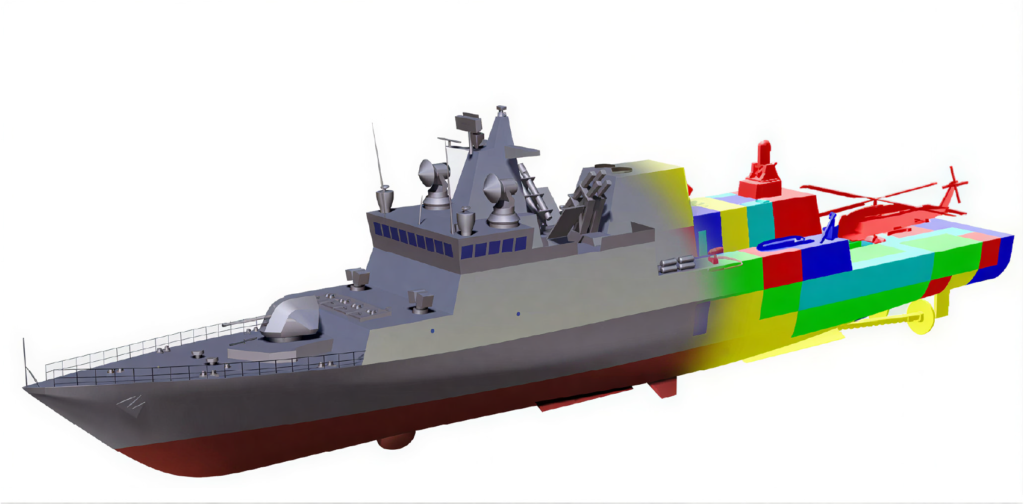
  • Concept Design & Building Block Methodology Enables early-stage design using modular components with defined attributes (e.g., weight, power, volume), allowing rapid iteration and risk reduction.
  • Stability Analysis Comprehensive intact and damaged stability assessments, including SOLAS 2009 compliance, docking, grounding, and emergency response simulations.
  • Manoeuvring & Performance Simulates turning circles, zig-zags, spirals, and submarine-specific dynamics using both linear and non-linear models.
  • Powering & Endurance Calculates effective power requirements considering hull geometry, appendages, fouling, air resistance, and shallow water effects.
  • Seakeeping Uses a 2D Rankine source method to assess vessel motion and operability in various sea states.
  • Structural Analysis Defines hull scantlings, decks, bulkheads, and performs blast, fragmentation, and ultimate strength assessments.
  • Radar Cross Section (RCS) Predicts radar signatures using high-frequency approximations, aiding stealth and survivability design.
  • Emergency Response Toolkit Models vessel behavior during incidents, including flooding, grounding, and weight shifts over time.

C-Marine’s team engages in collaborative discussions to extract and clarify these requirements, even when they are informally presented. This ensures that the design process is responsive, agile, and aligned with the owner’s expectations.

Integrated & Parametric Design Environment

Paramarine’s object-oriented and parametric design approach ensures that all calculations remain up‑to‑date as the design evolves. It eliminates the need for external data exports and supports collaborative design through Team Paramarine, allowing multiple users to work on a single project with version control and auditing.

  • Seamless integration with Siemens Parasolid™ and NX
  • Supports STL, STEP, DXF, and IGES formats
  • Embedded Excel and VBA for optimization routines
  • Customizable reporting directly into Microsoft Word

Trusted by Industry & Academia

Paramarine is used by:

  • Defense organizations: UK MOD, Brazilian Navy, US Navy (via ONR)
  • Shipbuilders: BAE Systems, Babcock, DCNS, Rolls Royce
  • Academic institutions: UCL, MIT
  • Digital-Ready: Prepared for seamless transition into digital modeling and simulation.

At University College London (UCL), Paramarine is central to the Design Research Centre’s innovative approach to ship design. Their “design building block” methodology allows naval architects to explore configurations from the inside out, enhancing flexibility and reducing risk

Why C-Marine Recommends Paramarine

C-Marine recommends Paramarine to:

  • Accelerate early-stage design decisions
  • Integrate sustainability and digitalization into vessel architecture
  • Conduct feasibility studies for propulsion upgrades and retrofits
  • Deliver high-quality, regulation-compliant designs for both commercial and naval vessels
SeaWeigh® - Onboard Stability & Loading Management by QinetiQ

SeaWeigh® is a powerful, onboard loading computer system developed by QinetiQ GRC, UK, and built upon the proven Paramarine® design framework. It is engineered to provide real-time, accurate assessments of ship stability and structural integrity under varying loading conditions. Certified by Lloyd’s Register to comply with IACS UR L5, SeaWeigh is trusted by naval and commercial fleets worldwide for its reliability, regulatory compliance, and decision‑support capabilities.

Core Features & Capabilities 

SeaWeigh is designed to support vessels with complex and variable loads, such as: 

  • Landing Platform Docks (LPDs) 
  • Aircraft Carriers 
  • Bulk and Box Carriers 
  • Ro-Pax Vessels

Key Functionalities: 

  • Stability Calculations 
  • Intact and damage stability assessments using limit curves or pre‑programmed damage cases. 
  • Compliance with Types 1, 2, and 3 stability software requirements. 
  • Loading Optimization 
  • Simulates various loading conditions and evaluates structural and stability impacts before action is taken. 
  • Decision Support 
  • Provides actionable insights during incidents, including damage or flooding scenarios. 
  • Emergency Response 
  • Real-time ship status transmission to shore-based teams via email. 
  • User-Friendly Interface 
  • Intuitive graphical interface with visual representation of ship condition and loading parameters. 

Data & Reporting Tools 

SeaWeigh presents all relevant parameters to assist the Master or ship staff in evaluating loading conditions: 

  • Deadweight and Lightship data 
  • Trim and Draft at marks and perpendiculars 
  • Displacement, VCG, LCG, TCG summaries 
  • Downflooding angles and openings 
  • Stability criteria with limit values and compliance status 

Each calculation includes:

  • Timestamp and version identification 
  • Clear warnings for non‑compliance 
  • Printable reports for onboard and shore‑based review 

Trusted by the Royal Navy 

SeaWeigh has been selected by the UK Ministry of Defence as the onboard stability management system for the Queen Elizabeth Class aircraft carriers, the largest warships ever built for the Royal Navy. It is integrated into the ship’s management systems to monitor fuel and water tank conditions, payload distribution, and provide real-time decision support during operations 

SURVIVETM - Integrated Survivability Analysis Software by QinetiQ

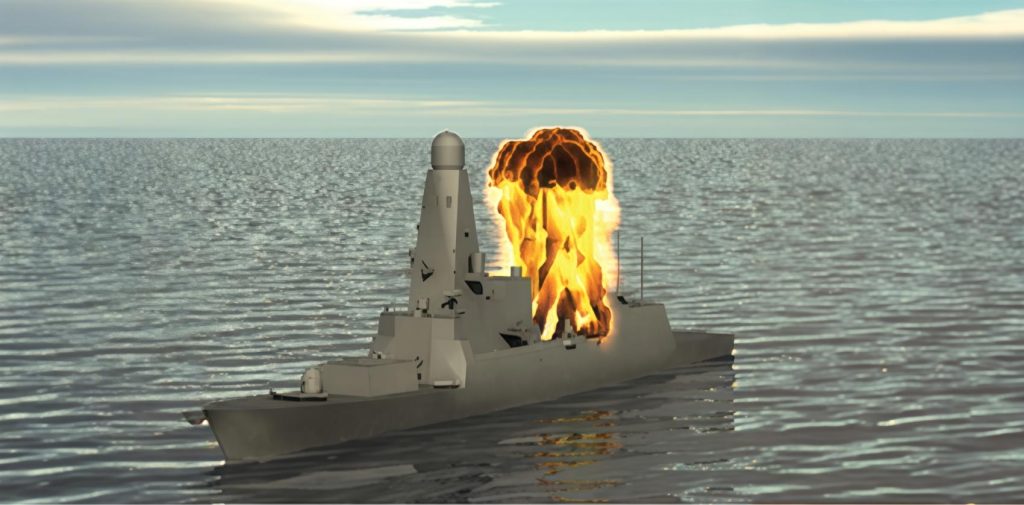
SURVIVE® is a comprehensive, fully integrated software toolset developed by QinetiQ UK to assess and enhance the survivability of marine platforms-both surface and underwater. Designed to support naval architects, defense planners, and shipbuilders, SURVIVE enables detailed modeling of vessel vulnerability and response to a wide range of threats, including explosions, fragmentation, underwater shock, fire, and flooding.

Validated against over 50 years of full-scale trials and experimental data, SURVIVE is a cornerstone of QinetiQ’s Marine Survivability Services and is trusted by the UK Ministry of Defence, Royal Navy, and leading defense contractors worldwide 

Key Capabilities

Paramarine supports the entire ship design lifecycle-from concept to detailed engineering-within a single, unified environment. Its key features include:

  • Threat Modeling & Damage Simulation 
  • Simulates effects of missiles, bombs, mines, torpedoes, and drone attacks. 
  • Models damage from blast, fragmentation, underwater shock, fire, and flooding. 
  • Consequence Analysis 
  • Predicts severity of damage and casualties from explosive events. 
  • Supports creation of Explosive Safety Case Reports and Threat Hazard Assessments (THA). 
  • Scenario-Based Assessment 
  • Rapid analysis of multiple threat scenarios for decision support. 
  • Used in forensic assessments of real-world incidents to determine weapon types and damage mechanisms. 
  • Above & Below Water Applications 
  • Applicable to ships, submarines, and personnel. 
  • Covers both peacetime and combat survivability planning. 
  • Validated & Configurable 
  • Code validated against hundreds of tests and trials. 
  • Models can be tailored to specific vessel types and operational contexts. 

Strategic Integration & Use Cases 

SURVIVE is used extensively by: 

  • UK MOD & Royal Navy: For survivability assessments of all major vessels, including aircraft carriers and submarines. 
  • Commercial Shipbuilders: To evaluate survivability in high‑risk environments. 
  • Defense Contractors: For design validation and incident mitigation planning. 

Example: For HMS Illustrious, SURVIVE was used to develop a Consequence Analysis Model to support its conversion to a helicopter carrier, predicting damage and personnel impact from explosive threats

C-Marine Recommendations 

By integrating SURVIVE into their design and feasibility workflows, C‑Marine customers can:

  • Offer survivability assessments as part of vessel design packages. 
  • Support naval clients with vulnerability reduction strategies. 
  • Enhance safety and compliance documentation for defense projects. 
  • Provide rapid-response modeling for incident analysis and operational planning. 

ShipWeightTM - Precision Weight Engineering for Marine Projects

ShipWeight® is a specialized software system developed by B&A Software AS in Ålesund, Norway, designed to estimate, track, and monitor the weight and center of gravity (CG) of ships and offshore structures throughout their entire lifecycle. From early concept design to final delivery, ShipWeight provides a structured, data‑driven approach to weight management, helping shipbuilders, designers, and engineers ensure optimal performance, safety, and cost control. 

Originally developed from a diploma thesis at NTNU (Norwegian University of Science and Technology), ShipWeight has evolved into the de facto standard for weight estimation and control in the marine industry, used by over 100 companies globally 

Key Features & Capabilities 

Paramarine supports the entire ship design lifecycle-from concept to detailed engineering-within a single, unified environment. Its key features include:

  • Lifecycle Weight Management 
  • Supports all project phases: conceptual design, basic and detailed engineering, construction, and delivery. 
  • Tracks weight changes due to design modifications and construction updates. 
  • Parametric Estimation 
  • Uses historical data and regression models to estimate weights in early design stages. 
  • Enables scaling from previous projects for faster and more accurate predictions. 
  • Work Breakdown Structure (WBS) Integration 
  • Organizes weight data into customizable weight groups. 
  • Supports modular and sectional breakdowns for complex vessels. 
  • Advanced Monitoring Tools 
  • Tracks weight trends, budget deviations, and project comparisons. 
  • Generates weight distribution curves and moment of inertia calculations. 
  • 3D Visualization & Reporting 
  • Visualizes weight data in 3D for better understanding and communication. 
  • Offers customizable reporting tools for internal and external stakeholders. 
  • Open Platform Architecture 
  • Transparent database structure allows users to create custom methods, parameters, and reports. 
  • Seamless integration with ExpressMarine (Rhino3D plugin) for structural weight import 

Why ShipWeight Matters 

Weight and CG are critical to:

  • Speed, stability, and seakeeping 
  • Deadweight and payload capacity 
  • Structural integrity and safety 
  • Cost estimation and progress tracking 

ShipWeight helps quantify uncertainty, reduce risk, and improve decision-making across all stakeholders-from shipyards and designers to owners and regulators 

Applications Across Vessel Types 

ShipWeight is used for: 

  • Fishing vessels, ferries, Ro‑Ro ships, seismic vessels 
  • Offshore platforms and supply vessels 
  • Naval ships and passenger vessels 

Its flexibility allows adaptation to both commercial and defense projects, making it a versatile tool for any marine engineering team.